I. The Berries
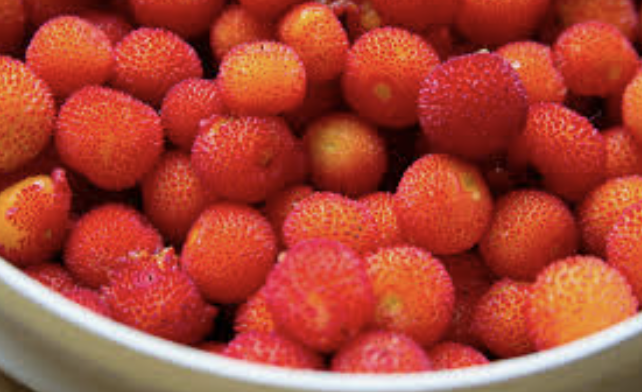
There is a small, extraordinary fruit that grows along the Ligurian coast called a corbezzolo. It is the color of a harvest moon, stippled and round, with a sweetness that catches you off guard — the kind of fruit that makes you feel the landscape has been keeping a secret from you.
My friend Edward encountered one for the first time at a dinner party in a stone villa above the sea. The hostess, Signora Marcella, a woman of considerable elegance, presented them at the fruit course in a white bowl, almost ceremonially. Edward, who approaches new experiences with the enthusiasm of a golden retriever and the Italian of a determined tourist, tasted one and felt — as one does with corbezzoli — an unreasonable happiness.
He turned to the hostess, eyes bright.
“Signora Marcella! Come sono buoni i suoi capezzoli!”
There are silences and then there are silences. This was of the second kind. Signora Marcella’s smile remained technically in place. Her husband set down his fork. The candles continued burning, indifferent to everything.
“Corbezzoli,” someone whispered.
Edward, who could not account for the sudden chill, ate another berry. Still delicious. Still inexplicable, the atmosphere. He decided, as people often do in foreign situations that confuse them, to elaborate.
“Sì, sì — so sweet, so round, so red and perfect! These capezzoli!”
“Capezzoli,” the same voice whispered, urgently now, “are nipples. These are corbezzoli.”
A lightbulb flashed on. Edward reported that was two adjectives too late.
He texted me the following morning:
“Nat, Last night I tasted corbezzoli for the first time — delicious!! — and told my hostess so — with the wrong word entirely. I am no longer welcome at the villa. The berries were excellent though! A new favourite fruit. Also because of the name, which sets my mind wandering in the most lascivious way. Hehehe!”
“PS: Corbezzoli, for the record, are the berries. Capezzoli is something else entirely. But you probably already knew that.“
Edward now knows both and won’t forget either. Nor, I suspect, will Signora Marcella. Rumor also has it that her husband no longer lets her serve them to foreigners.

II. The Milk
The first time I encountered Italian long-life milk, on my first visit to Italy at age twenty, I was deeply unsettled. In America, milk lives in the refrigerated section, cold and urgent, with an expiry date that gives you perhaps a week before it turns into curdled muck. In Italy, I found it stacked on ordinary shelves, in slim rectangular cartons, at room temperature, next to the pasta. Just … sitting there. Unrefrigerated. Untroubled. As if milk were a perfectly stable substance that required no coddling. It expired after months.
Latte a lunga conservazione. Long-conservation milk. Milk that had made arrangements.
My husband’s grandmother, Nonna Nella, was a woman of few words. Widowed, she had survived the war, raised three children on a Tuscan farm, and regarded most modern anxieties with confusion and skepticism. She was also not easily rattled. Or so it appeared.
I, armed with sincerity and barely intermediate Italian, explained my concerns about food over an afternoon visit to the farm.
In America, I told her, we didn’t have milk with preservativi in it.
Bent over her lap — she had been mending a sock — her head jerked up. Her expression, I now recognize, was heroic composure.
“I should hope not,” she said, and resumed stitching.
It was only later that I understood what I had said. Preservativi are not preservatives. They are condoms. I had told Nonna Nella, a devout Catholic grandmother in her eighties, that American milk producers showed admirable restraint in not adding rubber contraceptives to the milk supply.
She never mentioned it again. Neither did I.
But I think about her sometimes — her needle, her composure, the briefest flicker of something across her face before she shut it down completely — and I think: she had been kind. She didn’t want an American in the family. Especially not one who spoke about rubbers in milk. And it looked like she might be stuck with one. But she kept quiet.
The word I wanted was conservanti. I know that now.
That long-conservation milk still unsettles me. It’s still on shelves. With a 6-month “life”. And it tastes like it too.
III. The Fisherman
There is a one-vowel difference between pescare and pisciare in Italian. There is also a small difference in the consonants, but I was a barely intermediate linguist on a good day. Be that as it may, the former means to fish. The latter, to urinate. To a foreign ear, especially one that had been cramming vocabulary in the back of a cab on the way to the restaurant, I never noticed any difference.
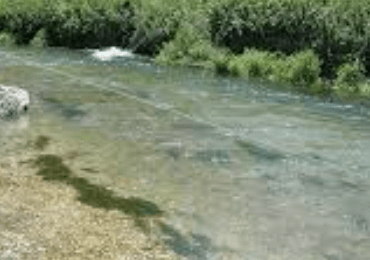
My future father-in-law, Enzo, was a solemn man who took two things seriously: his work, and his fishing. (He also took his family seriously, but that’s another story.) He had been fishing in Tuscan rivers and streams during the Second World War and after. He’d rise before dawn and read the sky, the water, the birds, the way others read the early edition — for information, for pleasure.
I knew this about him before I met him. I had been briefed. I had, in fact, been given this key detail as conversational prompt — talk to him about fishing, he loves fishing — my boyfriend, his son, had said.
The restaurant was the kind with heavy linen and a sommelier. We had been seated perhaps ten minutes. Introductions had been made. Wine had been poured. Silence had fallen, the overwhelming kind between people who are trying very hard but know each other very little and don’t speak each other’s language very well.
I smiled. It was time. I deployed the key.
“Enzo — quando è stato l’ultima volta che è andato a pisciare?”
He looked at me. I looked at him. The sommelier, who’d been busy uncorking our wine, put the bottle down and scurried across the room toward the kitchen.
My boyfriend beside me made a sound I had not previously heard. Choking but simultaneously snorting.
The word I wanted was pescare. Not pisciare.
I had just asked my future father-in-law when was the last time he’d gone for a pee.
Enzo, like Nonna Nella had with the milk mix-up (see II above), considered my utterance gravely, as if it were not entirely unreasonable, and responded simply:
“Stamattina.”
This morning.
He picked up his menu.
We never broached the topic of peeing again — although we did go hunting together (see Boar Hunting In Tuscany ). Over the years we have gotten along beautifully. Now he’s 97. Yesterday he told me, “At first, I didn’t want an American in the family. You were a bit strange in the beginning, you know? But now I am happy to have been so blessed. I have loved you. Remember this when I’m gone.”
I will, Enzo, I will.
IV. The Fish Market
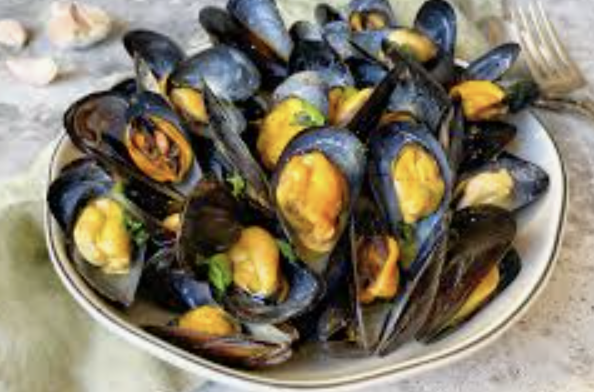
I was twenty, an exchange student, and I had decided to cook something special for my host family. Not hamburgers — everyone expected hamburgers. A friend from Maine had given me her family’s fish soup recipe with clams, mussels, the works. I had eaten something similar from a can back home and had found it perfectly respectable, if not as good as the real thing made from scratch. I had a recipe. I had ambition. I had almost-intermediate Italian.
The pescivendolo was a heavyset man of around forty — ancient, to my twenty-year-old eyes. His biceped, ebony-haired son was stacking crates of octopus nearby.
I stepped up and ordered.
“Vorrei un chilo di cazzi, per favore.”
The son burst out laughing. Between hiccups he said he had just one, that it wasn’t a kilo exactly, but it was pretty close, if that would do. The father’s shoulders were shaking. He turned away, laughing while leaning against the tiled wall behind him.
I knew enough to know what I’d said, and what he’d said. I told them to keep their cazzi, and left. The soup did not happen. The host family had whatever the host family had. I think they opened a box of frozen shrimp. I went to my room and made myself a peanut butter sandwich, a jar of which I had brought from America. A port in a storm. Nutty, buttery, comforting. I ate it, licking my fingers, recovering with each lick from the smarting.
FYI: Cozze are what I should have ordered. Cazzi are part of the male anatomy. A couple of little pesky vowels, once again, makes all the difference.
 Postcards from Italy---Natalia Sarkissian
Funny and poignant. Thanks for sharing!